Our Mission

Our mission is to inspire and encourage children to be artists by providing basic tools and inspiration for them to create. Every Young at ART bag sold, will also provide a bag to a child in need.

Tuesday, March 29, 2016

Living and Learning At Home Review

A huge thank you to Amy from Living and Learning at Home for sharing with us how she has used the Young at Art bag in her home schooling curriculum! Please click on the link and check out her website that is full of amazing tools to help busy homeschooling parents! Thank you Amy! You have some pretty talented artists! 

Art in the Morning


My children and I have been using this Young at Art bag for the past few weeks and we are really enjoying it!  We are using is as a part of our homeschool morning time.  If you are not familiar with the concept of morning time, it is an idea that many homeschoolers use where we gather everyone at the beginning of the day to enjoy some learning time together.  We try to pick subjects that can benefit all the ages of our children.  It is fairly easy for me because my children are close in age.  We typically do things like read aloud, recite memory work, read poetry, listen to classical music, etc.

When I got this Young at Art bag in the mail, I immediately knew that it would be a great candidate for morning time!  The first time we used it, I brought it to the table and let my children explore the contents.  My little creative girl we immediately excited =)


 My favorite part is that everything I need to teach art appreciation is right in the bag!  Information about 9 artists, sketch book, crayons, colored pencils, markers...it's all there!


We have been using these materials a few mornings a week, learning about one artist each time.  First I ask the kids if they remember any of the previous artists we have learned about.  I start with my daughter since she is the youngest and see if she can name one artist and then tell me something she remembers about him (what country he was from, in what time of history he lived, what kinds of art he was most famous for, etc.).  Then I ask my son if he can remember something other than what my daughter mentioned about that artist and then if he can name another artist that we have learned about.  We keep going until we have reviewed all that we previously learned.

Next I read to my children about a new artist.  I really love the amount of content that is in the book.  It is a "just right" amount for lower elementary kids.  Each artist is presented on one page.  Children get to see what the artist looked like and examples of his work, all while learning a few facts about him and his art.

I can't stress enough how much I appreciate everything being right there, ready for me to teach with.  So many times I have good intentions when it comes to art appreciation, but I typically don't follow through with my ideas because I don't have the time or energy to gather all of the pictures and information that I want to share with my kids.  Problem solved with Young at Art!

After we learn about the artist, I turn the page in the book and there is a super simple drawing prompt that relates to what we just learned.  At first I thought these were too simple, but my kids love them and spend quite a bit of time on them.  I let my daughter draw in the book and I have my son draw in the sketch book.  Since my son is in second grade, I have him write a sentence or two at the top of his page about what he learned about the artist.  


My children ask each morning if we can learn about another artist and that makes me so happy!  We are learning, creating, and making connections to what we already know.  Most of all, my kids are excited and proud of their work!  Thanks, Young at Art!


Monday, March 7, 2016

DR SEUSS (Part 2): Fun Facts about Dr. Suess


Source


     As we continue to celebrate Dr Seuss's birthday, we thought it might be fun to share some facts about the good doctor!


DID YOU KNOW?


  • Dr Seuss began his career as a teenager.  He was editor-in-chief of the Jack-O-Lantern, a humor magazine at Dartmouth College.  He wrote and illustrated cartoons.
  • He spent 15 years creating advertising campaigns for Standard Oil.
  • During World War II, he wrote political cartoons.
  • Dr Seuss never had children of his own, but had two step daughters in his second marriage.
  • "Seuss" was his middle name and his mother's maiden name.  It is actually pronounced like "zoice".
  • Dr Seuss's first book And to Think That I Saw it on Mulberry Street was rejected 27 times before it was published.  Mulberry was the name of the street his grandmother lived on.  
  • The first recorded instance of the word "nerd" is in his book "If I Ran A Zoo". 
  • Dr Seuss won two Academy Awards.
  • An editor bet Seuss he couldn't write a book using only 50 words.  The resulting story was "Green Eggs And Ham".
  • Dr Seuss had a secret closet filled with crazy hats.  Whenever he found he had writer's block, he would pick a hat and wear it until the words came.
Source

     We wanted to share some fun projects that others have done to celebrate the art of 
Dr Seuss.  We hope you enjoy them and we'd love to see some of your projects!!

Source
Source

Source

(Informational sources for this post: interestingliterature.com,  drseussart.com, 

     Helping your child learn to appreciate art also helps them with reading, math, and communication skills!  Book 1 in our Young at Art bag tells of other famous artists and has an activity to go along with each of them.  It also includes a sketch pad, crayons, markers, and colored pencils.   And the bonus is, for each art bag you purchase, we will donate one to a child in a hospital or shelter!  Find out more about the Young at Art bag at our website young-at-art.com. (Watch for our Book 2 bag coming out soon...it's all about sculpture!)


Monday, February 29, 2016

DR SEUSS: (Part 1) What A Parent's Influence Can Do

"The people who influence you are the people who believe in you."
Henry Drummond


     Who has more influence in a child's life than his or her parents?  What difference can it make in whom that child becomes?   Just for fun, let's look at the influence a set of parents had in this particular boy's life.


Source


    On March 2, 1904, the world became a brighter place with the birth of Theodore Geisel.  Born to a prominent family in Springfield, Massachusetts to parents who saw him as a "personality" to be encouraged.   
     Ted's father, in 1931, became superintendent of parks.  Under his supervision was a magnificent 500-acre park and within the park was the Springfield Zoo.  


"You have brains in your head
You have feet in your shoes
You can steer yourself
any direction you choose."

Ted often went there with his father and enjoyed some behind-the-scenes access. The zoo became a beloved part of his childhood.  If his father couldn't take Ted and his sketchpad, then he would go with his mother or his sister, Marnie.

"Early on, Ted's mother became his 'accomplice in crime,' 
encouraging him to draw animal caricatures on the plaster walls
 of his bedroom.  She often put her children to bed while "chanting" 
rhymes she remembered from her childhood.Later, his father 
became an unexpected resource,who helped with his son's 
artistic efforts.  Horns, antlers, and bills from zoo animals 
who had met their demise were shipped to Ted's New York 
apartment to become exotic beaks and headdresses 
on his bizarre taxidermy sculptures."


          Ted's parents loved him deeply, reveling in his random wit, his cheerfulness and his genuine concern for others.  As a result, Ted grew into a devoted son and a faithful friend. From the foundation of support, encouragement, and belief shown to him by his parents and family, Theodore Geisel became one of the most recognized artists and writers of the 20th century.
     
Source

     Thank you to Theodore and Henrietta Geisel for their constant encouragement and support to their son.  On March 2, we celebrate the birthday of one who has long been considered a national treasure, Theodore Seuss Geisel, aka Dr Seuss. 
(Informational sources for this blog - drseussart.com, catinthehat.org, biography.com/people/dr-seuss)

Source

     In parenting, little things can make a big difference!  Why not gather your kids, grab some crayons or paints, some paper (anything will do) and celebrate the birthday of 
Dr. Seuss by creating the craziest, most colorful, most silliest creatures you can think of! Maybe even put them all together in your very own book!

"There is fun to be done
There are points to be scored
There are games to be won!"

    Praise, encourage, and delight in their creations!

Email us your art work!  We'd love to see it!!

youngatart2015@gmail.com
young-at-art.com


Monday, February 22, 2016

Painting Projects for Kids {and thoughts from Teach Kids Art!}


Since we're still focusing on 
painting 
this month we wanted to share a few ideas for getting your kids involved in painting!  There are hundreds of projects but here are a few resources to help you out.


First of all we'd like to thank Cheryl Trowbridge of Teach Kids Art for checking out our Young At Art bag and sharing her thoughts.  Check it out at Giving Back with Art and read below for some fun ideas from her website.


If you looking for a way to share your love of arts and wanting a fun way to give to kids who could use a little joy in their challenges please stop by Young At Art and grab and bag or two to share with someone you love and allow us to give some away too!

Tuesday, February 16, 2016

Creative Painting Boredom Buster (Great for a Rainy or Sick Day!)

It's that time of year... and we've all been sick with colds or the flu.  We're all stir crazy with some serious cabin fever.  So, in frantic attempts to calm the sibling battles we threw out the paints and a fun new challenge.  


I told the kids to rummage though the house to find 3 random objects each that could be used to create a masterpiece. 


My 3 rules for the objects: 
  1. It had to be ok to throw away when we were done, or
  2. Very easy to wash after, and
  3. Mom had last say on veto rights (i.e. my daughter wanting to hold her little brother upside down and use hair as a paintbrush... Um no.  But 10 points for creativity!)


Other than that anything goes.  Here is a picture of some of the "tools" we found.


Some of the favorites ended up being the snake (of course), the pipe cleaner bent into a spiral, the toothbrush, and the hair clip. (and of course at the end the fingers were used in the end to really make some messy fun.


So if there are any others out there looking for a sanity saver with all of the bugs going around here is a fun distraction from the frustration of being quarantined from the rest of the world.


And a little challenge for you!  Try this activity and see what your kids come up with.  And when you do send us pics or comment below and tell us what fun "tools" they came up with! We'd love to hear!!


Saturday, February 6, 2016

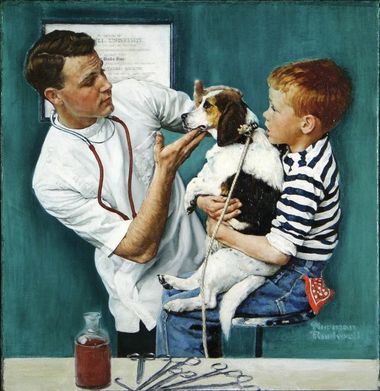
Motivating Your Kids with artists like Norman Rockwell!

One of the fun ways to motivate your kids in their work is by sharing fun success stories of others.  We are excited not only to celebrate Norman Rockwell's birthday but also to use some fun tidbits from his younger years.  

Source

FINDING MOTIVATION 

-Watch for exhibits at nearby museums featuring fun and interesting artists 

We currently have a local museum displaying some of Norman Rockwell's work.  It was so fun to take the kids and see his paintings, his process, and watch a fun film about his life.  Getting out to the exhibits is a little more hands on and exciting than just reading about them.

  "Runs in the family. Norman's grandfather was an English artist, 
Thomas Hill, who specialized in very detailed animal drawings. 
Norman's father liked to copy illustrations from magazines, and 
would pull up a chair for Norman to do it with him."

Source


-Search for fun facts on the internet

If a museum is not possible we have so much information at our fingertips.  Pull up a chair with the kids, pick an artist and see what you can find!


"Silver lining. As a boy, Norman was very thin and awkward. His pigeon-toed 
feet caused him to wear corrective shoes at the age of ten, and glasses 
at twelve -- giving him the nickname "Moony". Poor at sports, 
he found he could entertain his friends through his art."


-Visit your local library

This one can be a win-win for your students who have to read a variety of genres in their school classes.  Not only can they be inspired by these talented men and women but they are also fulfilling an assignment for school!  


"Early work. When he was just five years old, other boys played with store-
bought ships to have naval battles. Since he couldn't afford them, Norman 
cut some of his own out of cardboard and painted them. They became 
so popular, other boys asked him to make some for them!"

Source

Once you've found some resources help your kids find the inspiring stories that will spark their interest.  The possibilities are almost endless.  There is sure to be a story for your kids!


"What a start! He had his first paying assignment by the time he was sixteen. 
By the age of nineteen he was the art director for Boys' Life magazine. 
His first cover of Saturday Evening Post appeared in 1916, when he 
was just twenty-two. He got the job with the help of his roommate 
who was already doing cartoons for the magazine."


Hopefully these fun facts about Norman Rockwell will be something to encourage your up and coming artists.  What has inspired your kids?  How do you encourage them?  Please share in the comments below.  We'd love to hear your success stories!


Monday, February 1, 2016

3 Ways Painting Can Make You a Super Parent!

Source

We've already posted on some great reasons why art is so beneficial (Here and Here), and we're going to talk a little more about that as we focus this month on painting!

So here are some tips on how painting can help out as you work with kids...


* Connecting with your Child:
  
I got this great little insight from the Penn State Extension site.

"Painting with young children allows us to see much more than a simple picture. If we observe with careful eyes and ears, we can gain tremendous information about each child. We can share with families what we have discovered and why we feel it is important. We can create enjoyable experiences and support development at the same time; what a masterpiece!"

I read a great blog that talked about being able to do things that you enjoy and still spend time with the kids.  For example, coloring books for grownups are one of the latest crazes.  So, if you are not already a painter try your hand with a brush.  Enjoy creating but also enjoy watching your kids explore and experiment.  They don't usually have the boundaries we somehow set as adults.  Break those rules and get messy! And enjoy the connection with your kids.  

* Build Their Self Esteem:

Source
Raising Small Souls points out that:

"By learning to paint, children gain a skill which they can be proud of. It gives them a foundation to look at the world with the confidence they can accomplish a goal. The response they get from others in regard to their work can boost their self-confidence. Because there is no right way in the arts, children who paint can be proud to be unique and to express their artistic style.
Children need to work with other children and adults while they’re learning to paint. This interaction will boost their confidence, and also give them social skills to help them in other aspects of life."
You can become a super parent by providing the supplies, complimenting them and encouraging their progress, and displaying their work.  I have a wall in my kitchen that is dedicated as our family museum.  I joke that I probably won't have the funds to collect "fine art" but I sure have some of my favorite pieces hanging right in my home!  


* Ease their stress and pain:
Source
Artist Jeannina Blanco wrote:
"People who immerse themselves several hours painting or creating something enter a purer area, in a very strong state of concentration; they abstract themselves from their surroundings and time passes by without noticing it. Physical pains fade away...and we can spend hours without feeling tiredness, pain or other conditions (unlike other activities.)...
"Painting helps us get distracted from our problems; it helps us take anguish out and transform it in something nice... This helps us identify the feelings and increase our expression capabilities." 
Ok, so that sounds great for the kids but I'm thinking I could use a little of that myself as well!  Who doesn't need a little vacation from the challenges of life. And for those of us who can't afford that break as often as needed this is a pretty inexpensive way to escape.  
Our kids are pushed so hard in school these days.  There isn't a whole lot of time to play, let alone express their own personalities and talents.  Art is a simple and effective way to let them take a break.  

So there you have it.  Three simple, feasible, and effective ways to make you a super hero in your kids eyes.  And the more you can play with them the better! 
What are you waiting for?  Grab some supplies and start creating together!