Our Mission

Our mission is to inspire and encourage children to be artists by providing basic tools and inspiration for them to create. Every Young at ART bag sold, will also provide a bag to a child in need.

Monday, May 23, 2016

Why Play with Clay?

"We don't stop playing because we grow old,
we grow old because we stop playing"
George Bernard Shaw
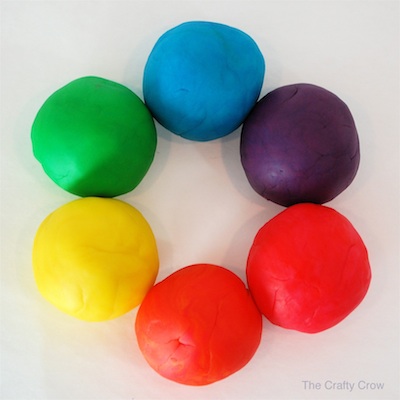


     This month we have talked about some of the therapeutic benefits of coloring for anyone from a toddler to the elderly with dementia.  Did you know that some of those same benefits can be found when using modeling clay?  

Research shows that:
     Clay has a natural appeal, just like water and sand.  Clay is a wonderful tactile medium that can be very calming for both children and adults.  Manipulating the clay can be a physical outlet for conveying emotions and reducing stress. Working with clay builds self-esteem.  It is easy to work with giving a child a feeling of being in control as they pound, roll, shape, flatten, and tear.

Ella, age 7


     When a child has learned to express their personal vision in clay, they become empowered in ways that go beyond the art room and they feel a sense of accomplishment when a project is finished.
from artistree.com

More reasons to play:
-Clay naturally stimulates a child's curiosity.  It is so fascinating to the child that it motivates them to work for longer periods of time extending the attention span of some children.

-Working with clay improves dexterity and uses both small and large muscles  Children use their arms, back and shoulders to mold clay.  It also increases a child's eye-hand coordination.

-Children's imaginations are stimulated through the use of clay.  They stretch their minds to develop new ideas.

-A child that learns at an early age that anything that can be imagined can be created is more likely to be more creative and intelligent than a child that only plays with manufactured toys.
from examiner.com/article/the-benefits-of-working-with-clay-for-kids


Aubrey, age 10


Again, we find this information fascinating and we agree with every bit of it. We also agree with Albert Einstein who said:

"Play is the highest form of research"

 So we did some research of our own.  We asked six members of our team
 (ages 3 to 12) to answer this question:

What do YOU like about playing with clay?

Their responses were:
"Gasp! You can make fun shapes and it feels funny!"
"You can make almost anything you want with it"
"You can build people out of it"
"I like to put guys in it and cover them up!"
"I can use my imagination and make stuff"
"It's just....fun!"

So based on another scientific Young at Art study, we have determined that 
playing with clay benefits your mind, your body, and your soul
but mostly..... it's just plain FUN
and we highly recommend it!!

 parentinghealthybabies.com


(Coming Soon!! Young at art Book 2 and sculpture art bag!!)


Wednesday, May 18, 2016

Just Five More Minutes.....Please?

(parentingbeyondpunishment.com)


We all know that one of the most challenging tasks for a mother, a grandmother, a teacher, or anyone else who works with children is to get them to do what they were asked to do, when they were asked to do it.  Often the reason the child does not immediately obey is because he or she is focused on doing something fun. Who wants to leave when you are thoroughly enjoying what you are doing? Right?


The late and great psychologist Carl Jung (1875-1961) was way ahead of his time when he prescribed "coloring" for his patients.  Jung felt that it would help his patient's access their subconscious and new self-knowledge.  Many psychologists today suggest coloring to their patients as an alternative to medication, as a means of relaxation, and as a calming tool.  It can help the individual focus on the act of coloring intricate pictures for hours on end, vs. focusing on intrusive and troubling thoughts. 

Doing therapeutic artwork can help reduce feelings of anxiety and unpleasantness.  The focus we place on the project at hand, and on an object can replace negative and unhelpful thoughts from entering our minds.  The step of acting and doing vs. observing is a powerful deterrent to focusing on physical or emotional pain.


Adult coloring books clearly help serve many purposes that are beneficial.  They are highly effective for many reasons, and the ideas behind them have stood the test of time, even if they feel like they are only the latest fad.  Try one out and you may just surprise yourself. (huffintonpost.com/7 Reasons Adult Coloring Books Are Great for Your Mental, Emotional and Intellectual Health)


(care.com)


Who knows, maybe your roles will reverse.   It might be your child with arms folded, toe tapping, and impatiently waiting, and it might just be you saying, "Just five more minutes....please??


(P.S.  Our Book 2 and Young at Art bag are close to being available!  This one focuses on sculpture!  Watch for it soon....
We're thinking of making a Book 3 and art bag just for grown-ups. Is that something that would interest you??  As with the other bags, for each one sold, one will be donated.  The "grown-ups bag" would be donated to a women's shelter, immigrants, or any other adults in need.
Let us know your thoughts!)


Thursday, May 12, 2016

COLORING - Not Just For Kids Anymore!

todayifoundout.com

     One can hardly go anywhere these days without seeing a variety of coloring books for sale--for adults!  Can it be that in this hectic and stress filled world, one could actually find rest and relaxation through an activity as simple as coloring?

     It wasn't hard to find research on the benefits of coloring for any age.  Here is just a sample of what we found.

     Coloring for the Elderly

"The effects of coloring activities for people living with dementia show positive outcomes, most notably a decrease in agitation and anxiety.  The therapeutic value comes in part from a participant's need to concentrate and in doing so they may 'forget' their troubles.  Relaxation and meditative moods often follow.
     
     Benefits of coloring for Seniors

  Improves moods
  Relieves stress
  Reduces agitation
  Promotes socialization and reminiscing
  Provides an outlet for self-expression
  Helps to maintain motor function
  Improves dexterity (grip control)
(www.goldencarers.com)


pinterest.com


      Coloring for Adults

   Psychologists often suggest coloring as an alternative to medication
   Boredom and stress can be triggers for emotional health issues. Coloring can help.
   Coloring can be calming for those with PTSD, anxiety, and stress issues.
   Coloring can invoke easier and happier times of childhood.
   When coloring, we utilize areas of the brain that enhance focus and concentration.
   Both the right and left side of the brain are utilized when coloring.
 Negative thoughts can be replaced by positive and pleasant thoughts.
(www.huffingtonpost.com)


   Benefits of coloring for kids

Coloring helps a child practice holding a writing tool and develops tiny muscles.
A child learns hand-eye coordination through coloring.
Children learn to develop the skill of patience and learn to focus on details.
Coloring allows a child to relax and be comfortable while creating.
Children can learn to recognize color, hue, line, perspective, shape and form.
Eventually a child can learn to plan as they choose colors and order.
Coloring allow a child to have quality quiet time.
(letkidscreate.blogspot.com)


     These are all great reasons for someone of any age to explore the world of coloring.
However, we here at Young at Art feel there are some really important things that were missed in these studies.  We surveyed our team and wanted to share with you our own findings.

     Each person (ranging in age from 3 to ..... well, let's just say "adult") was asked the following question:   "What do you like about coloring?"

Here are a few of the answers we received:

   "It's fun to design and there are so many colors.  I love abstract and mixing colors"
"It's fun and you can use your imagination"
"I like to see how the colors come together differently each time you play.  I love playing with pattern and texture depending on how you hold the crayon, pencil, or marker"
"I like color!"
"It's so fun!"
"I like to show people what I'm imagining"
"It makes me feel like a kid again.  A little break from the grown up world."

time.com

          Based on our own scientific research we came to the conclusion that coloring, no matter how old you are, is just plain FUN!  So next time you are feeling a little bored, a little anxious, or a little creative and a little imaginative, grab that box of crayons and
escape to the wonderful world of color and crayons!!  You'll be glad you did!  ;-)


Wednesday, April 27, 2016

Mixed Media and Mother's Day

With Mother's Day just a few weeks away we're going to help with some artistic ways to show that sweet lady in your life how grateful you are for her.  Whether it's a mother, grandma, aunt, sister, or friend I am sure they would love to get a personal note made with love.  Adults and kids alike can enjoy using their talents to show appreciation.

We've compiled a few ideas for Mother's Day cards that can be used for projects at home, school, church or wherever you are putting together a gift for your loved one.  

Source
For the younger kids:  Here are some easy ways to cut, rip, glue and add a little personality


Source

Source

And if you really want to add a personal touch:


Source


And a couple of ideas for teens or adults:  Use your creativity to paint, layer, design, and have fun with mixed media.

Source

Source

These are just some ideas to get the creative juices flowing.  Making your own card is a great way to show your gratitude.  


Monday, April 11, 2016

Mixed Media Month - Collage: Fun for all ages

This month we are going to talk Mixed Media.  Collage is a great mixed media activity for all ages.  My littlest of the littles is all about cutting and tearing paper and one of my favorites arts is combining paper and photos (a.k.a scrapbooking).  This is a great way to work along side a child doing something you both love.  

Check out some of the fun craft and teaching ideas we have below!!

Source
Fun fact: The term collage was coined by Georges Braque and Pablo Picasso in 1912. The two artists worked together during that time period and experimented with collage, using bits of glued paper added to charcoal drawings.  (Source)


Collage Ideas for Kids

We found a whole list of fun collage ideas at artfulparent.com. There are a lot of different ideas for kids!

The Artist from a Distance by collage artist Megan CoyleFor a more challenging project for teens and adults check out these lessons plans from mycole.com


Fun fact: The word Collage comes from the French: coller, meaning to glue. (Source)

Source

For those of you looking to teach a little art history with your collage we found this great site for kid friendly education on collage.  For instance did you know that "techniques of collage were first used at the time of the invention of paper in China, around 200 B.C."


We would love to feature your art in our gallery at Young-At-Art.com. Use some of these ideas or come up with some of your own and send them our way!  You can visit the website or email them to youngatart2015@gmail.com.

Tuesday, March 29, 2016

Living and Learning At Home Review

A huge thank you to Amy from Living and Learning at Home for sharing with us how she has used the Young at Art bag in her home schooling curriculum! Please click on the link and check out her website that is full of amazing tools to help busy homeschooling parents! Thank you Amy! You have some pretty talented artists! 

Art in the Morning


My children and I have been using this Young at Art bag for the past few weeks and we are really enjoying it!  We are using is as a part of our homeschool morning time.  If you are not familiar with the concept of morning time, it is an idea that many homeschoolers use where we gather everyone at the beginning of the day to enjoy some learning time together.  We try to pick subjects that can benefit all the ages of our children.  It is fairly easy for me because my children are close in age.  We typically do things like read aloud, recite memory work, read poetry, listen to classical music, etc.

When I got this Young at Art bag in the mail, I immediately knew that it would be a great candidate for morning time!  The first time we used it, I brought it to the table and let my children explore the contents.  My little creative girl we immediately excited =)


 My favorite part is that everything I need to teach art appreciation is right in the bag!  Information about 9 artists, sketch book, crayons, colored pencils, markers...it's all there!


We have been using these materials a few mornings a week, learning about one artist each time.  First I ask the kids if they remember any of the previous artists we have learned about.  I start with my daughter since she is the youngest and see if she can name one artist and then tell me something she remembers about him (what country he was from, in what time of history he lived, what kinds of art he was most famous for, etc.).  Then I ask my son if he can remember something other than what my daughter mentioned about that artist and then if he can name another artist that we have learned about.  We keep going until we have reviewed all that we previously learned.

Next I read to my children about a new artist.  I really love the amount of content that is in the book.  It is a "just right" amount for lower elementary kids.  Each artist is presented on one page.  Children get to see what the artist looked like and examples of his work, all while learning a few facts about him and his art.

I can't stress enough how much I appreciate everything being right there, ready for me to teach with.  So many times I have good intentions when it comes to art appreciation, but I typically don't follow through with my ideas because I don't have the time or energy to gather all of the pictures and information that I want to share with my kids.  Problem solved with Young at Art!

After we learn about the artist, I turn the page in the book and there is a super simple drawing prompt that relates to what we just learned.  At first I thought these were too simple, but my kids love them and spend quite a bit of time on them.  I let my daughter draw in the book and I have my son draw in the sketch book.  Since my son is in second grade, I have him write a sentence or two at the top of his page about what he learned about the artist.  


My children ask each morning if we can learn about another artist and that makes me so happy!  We are learning, creating, and making connections to what we already know.  Most of all, my kids are excited and proud of their work!  Thanks, Young at Art!


Monday, March 7, 2016

DR SEUSS (Part 2): Fun Facts about Dr. Suess


Source


     As we continue to celebrate Dr Seuss's birthday, we thought it might be fun to share some facts about the good doctor!


DID YOU KNOW?


  • Dr Seuss began his career as a teenager.  He was editor-in-chief of the Jack-O-Lantern, a humor magazine at Dartmouth College.  He wrote and illustrated cartoons.
  • He spent 15 years creating advertising campaigns for Standard Oil.
  • During World War II, he wrote political cartoons.
  • Dr Seuss never had children of his own, but had two step daughters in his second marriage.
  • "Seuss" was his middle name and his mother's maiden name.  It is actually pronounced like "zoice".
  • Dr Seuss's first book And to Think That I Saw it on Mulberry Street was rejected 27 times before it was published.  Mulberry was the name of the street his grandmother lived on.  
  • The first recorded instance of the word "nerd" is in his book "If I Ran A Zoo". 
  • Dr Seuss won two Academy Awards.
  • An editor bet Seuss he couldn't write a book using only 50 words.  The resulting story was "Green Eggs And Ham".
  • Dr Seuss had a secret closet filled with crazy hats.  Whenever he found he had writer's block, he would pick a hat and wear it until the words came.
Source

     We wanted to share some fun projects that others have done to celebrate the art of 
Dr Seuss.  We hope you enjoy them and we'd love to see some of your projects!!

Source
Source

Source

(Informational sources for this post: interestingliterature.com,  drseussart.com, 

     Helping your child learn to appreciate art also helps them with reading, math, and communication skills!  Book 1 in our Young at Art bag tells of other famous artists and has an activity to go along with each of them.  It also includes a sketch pad, crayons, markers, and colored pencils.   And the bonus is, for each art bag you purchase, we will donate one to a child in a hospital or shelter!  Find out more about the Young at Art bag at our website young-at-art.com. (Watch for our Book 2 bag coming out soon...it's all about sculpture!)